
Engine Replacement for Streatham Drivers in Hackbridge

Hours on the 20mph crawl of Streatham High Road, then queues on Mitcham Lane towards the Figges Marsh signals, can expose a weak engine. We are about 20 minutes away in Hackbridge, recovering failed cars from Streatham and fitting code-matched replacement engines from £900.

  • ★★★★★ 4.9/5 from 87 Google reviews
  • ~20 min from Streatham
  • Mon–Sat 8am–8pm
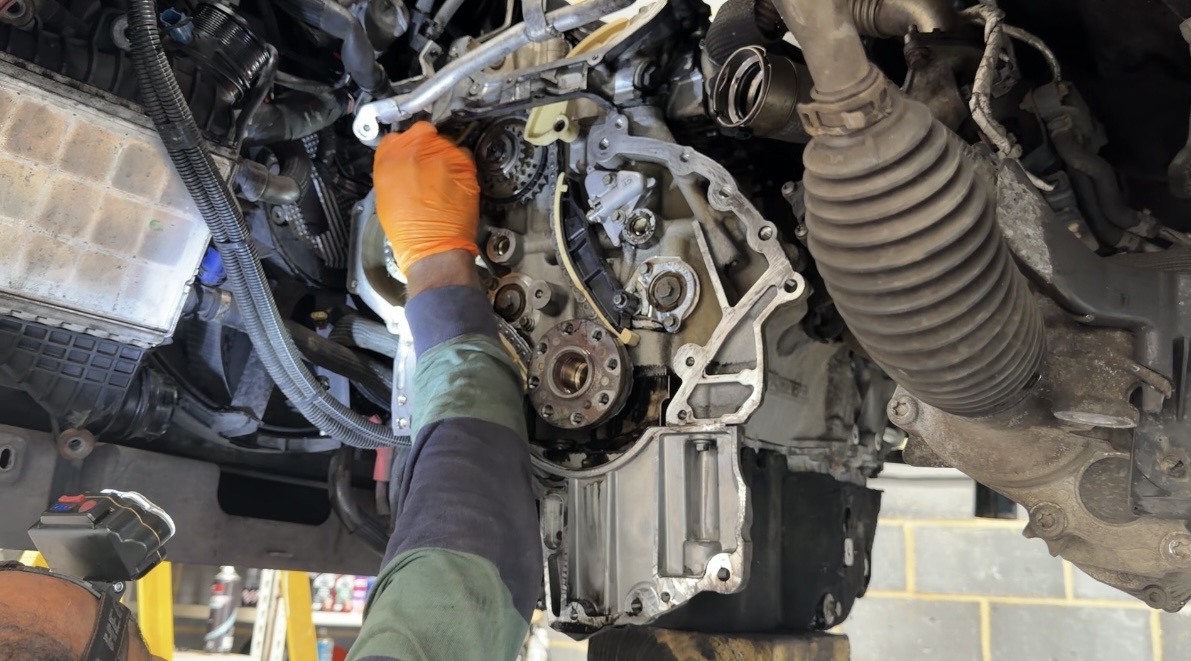
Technician working in an engine bay at KITH Cars Garage & Bodyworks, Hackbridge

Stop-start Streatham and the engines it catches out

Streatham's traffic rarely flows. Streatham High Road is a 20mph red route with buses and frequent crossings, and Mitcham Lane and Streatham Road carry steady traffic towards Mitcham, queuing at the Figges Marsh signals. For an engine, that means long spells at low revs with little airflow, which is exactly when a failing radiator fan, a weak water pump or a slow coolant leak reveals itself. An engine run hot for too long can warp or crack its cylinder head.

Many Streatham cars are used for private hire and deliveries, and high-mileage engines with long idling times need their oil changed on time. Where they do not get it, we see worn bearings and sludge. Around Streatham Park and near Tooting Bec Common and Streatham Hill station, many cars are smaller hatchbacks used for short trips, and short-trip engines can build up moisture and fuel in the oil. Both patterns are avoidable, but once the bearings have gone, a replacement engine is often the only sensible fix.

Before we recommend any replacement, we confirm the failure with compression and leak-down tests, a borescope and an oil check. Some engines that sound finished only need a head gasket or a timing kit. If the engine is beyond repair, we compare a reconditioned engine, a good used one and not going ahead, and we are straightforward about which makes sense for your car and its value. The condition of the gearbox and body matters as much as the engine.

From Streatham we are about 5.5 miles away via Mitcham, and a car with a failed engine should come to us by recovery. We can collect it. You get a written quote before any work, the supplier's warranty details on the engine and our 3-month workmanship warranty on the labour. Ask about a courtesy car when you book, subject to availability.

Engine Replacement: what’s involved

Replacing an engine is a big decision, and it should only happen once the failure is confirmed. Some problems that sound terminal, such as a misfire, heavy smoke or a no-start, can be injectors, coils, a turbo or a head gasket. Genuine engine failure usually means internal mechanical damage: bent valves and damaged pistons after a timing failure, spun bearings from oil starvation, water ingestion that bends connecting rods, or overheating that cracks the head or block.

When the engine is beyond economical repair, a replacement engine is often cheaper than a full rebuild and can give a sound car many more years. The replacement must match your engine code so it fits the car's mountings, wiring and engine management. We transfer ancillary parts, renew the seals and wearing parts that are easy to reach with the engine out, and set everything up before the car goes back on the road.

From £900Written quote first
2–5 daysTypical time in the workshop
3 monthsWorkmanship warranty
4.9★87 Google reviews

When an engine may need replacing

Deep knocking from the bottom end

A heavy knock that rises with revs, often after low oil pressure, usually means worn or spun crankshaft bearings.

Timing belt or chain failure

If the timing has broken or jumped on an interference engine, several valves are usually bent and pistons can be damaged. We check the extent before advising.

Water ingestion

Driving through deep water can draw water into the cylinders. The engine stops abruptly, and connecting rods can bend.

Severe overheating

An engine driven while overheating can warp or crack the cylinder head or block, often with coolant mixing into the oil.

Low compression across cylinders

Poor compression in several cylinders from worn rings or bores leads to smoke, oil consumption and lack of power.

Metal in the oil

Metallic particles in the oil or sump usually mean internal parts are breaking up.

Seized engine

An engine that will not turn at all on the starter or by hand has internal damage.

When is replacement the right choice?

Replacement makes sense when the engine has confirmed internal damage and the rest of the car is worth keeping. We compare three options honestly: repairing the existing engine, fitting a replacement, or not proceeding if the car's value does not justify the cost. The age and condition of the gearbox, body and suspension matter too. If a head rebuild or new timing kit will solve the problem, we will say so rather than recommend a whole engine.

  • Confirmed bottom-end damage such as spun bearings
  • Multiple bent valves with piston or head damage after a timing failure
  • Bent connecting rods after water ingestion
  • Cracked block or head after severe overheating
  • When the rest of the car justifies the investment

How we replace an engine

  1. Confirm the failureWe use compression and leak-down tests, fault codes, a borescope inspection of the cylinders and oil checks to confirm what has actually failed.
  2. Options and written quoteWe explain repair versus replacement, reconditioned versus used engines, and what warranty the engine supplier provides, then quote in writing.
  3. Source the right engineWe source an engine with the same engine code and check its mileage and condition. Used engines are checked for compression where the supplier allows.
  4. Remove the old engineFluids are drained and the engine removed, with or without the gearbox depending on the car.
  5. Prepare the replacementAncillaries are transferred, and we replace seals, gaskets and wearing parts that are easy to reach now. On used engines with unknown history we recommend a new cambelt kit.
  6. Fit and connectThe engine is fitted with new mounts where needed, connected and filled with oil, coolant and any fluids disturbed, to manufacturer specification.
  7. First start and checksWe prime the oil system before first start, check oil pressure, leaks and fault codes, and set up any adaptations. Diesel injector codes are programmed if injectors change.
  8. Road test and handoverWe road test, recheck levels and leaks once cool, and give you the new engine number and running-in advice.

Engines and parts we fit

We fit reconditioned engines, which have been stripped, machined where needed and rebuilt with new wearing parts, or good used engines with known mileage from established suppliers. Both are matched to your engine code. Every job includes new gaskets and seals, a new oil filter and oil to your manufacturer's specification, such as the appropriate Castrol grade, plus fresh coolant. We also advise on the clutch and flywheel while the engine is out.

  • Reconditioned or used engine matched by engine code
  • New gaskets, seals and fixings where required
  • Engine oil to manufacturer specification and a new oil filter
  • Coolant, and new engine mounts where worn
  • Timing belt kit on used engines of unknown history

How long it takes

2–5 days

The fitting itself usually takes 1–3 working days depending on the car. Sourcing the right engine can add time, so we give you a realistic date when we quote.

What’s included

  • Diagnosis to confirm engine failure
  • Engine sourced by matching engine code
  • All gaskets, seals and fluids
  • Transfer of ancillaries and oil system priming
  • Fault code check, road test and running-in advice
  • 3-month workmanship warranty on our labour

From Streatham to our Hackbridge workshop

From St Leonard's Church take Mitcham Lane (A216) south-west; it becomes Streatham Road and reaches the signalised Figges Marsh junction in Mitcham, where you turn left onto London Road (A217). Follow the A217 around Mitcham town centre's one-way system to the Cricket Green, take Cranmer Road (A239) to Carshalton Road (A237) and head south past Mitcham Junction; past Beddington Corner it becomes London Road into Hackbridge, where Soho Mills is near Hackbridge station.

We can recover your car from Streatham to Soho Mills, about 5.5 miles via Mitcham Lane, Figges Marsh and Mitcham town centre, then south past Mitcham Junction into Hackbridge.

Directions from Streatham

About Streatham

Streatham is a large, busy south London district strung along the A23, the line of the old London to Brighton road, and is one of London's designated major town centres. It grew from a Georgian spa village into a Victorian and Edwardian suburb, and today mixes big period houses and mansion blocks around Streatham Hill and the Common with terraced streets in Streatham Vale and Streatham Park. It is popular with young families and professionals commuting into central London. Driving here is dominated by the long, slow A23 high road, with residential side streets increasingly shaped by parking zones and traffic filters.

Places nearby: Streatham Common, The Rookery, Norwood Grove, St Leonard's Church, Streatham Ice and Leisure Centre, Streatham Hill Theatre

Postcodes: SW16, SW2 · London Borough of Lambeth (with western fringes in Wandsworth)

More about KITH for Streatham drivers

Engine Replacement in Streatham: your questions answered

Is it worth coming from Streatham to Hackbridge for an engine replacement?

An engine replacement is a big job, and we handle it from recovery to handover, with testing to confirm the failure and a written quote first. The distance matters less because we can collect the car and bring it back.

My engine overheated on Streatham Hill. What happens next?

Do not keep restarting it. We recover the car, pressure test the cooling system, check the oil for coolant and test compression. Often the damage is a head gasket or warped head. If it is worse, we explain replacement options.

Can I keep my car parked in a Lambeth controlled zone while I decide about a new engine?

You can if you have a valid permit or are within the rules, but a non-running car in a controlled bay can still attract a penalty. We can recover it to our workshop while you decide, so you are not worrying about parking.

Reconditioned or used: which is better?

A reconditioned engine has been rebuilt with new wearing parts, so it costs more but starts fresh. A good used engine is cheaper and suits older or lower-value cars. We explain the options and the warranty each supplier offers so you can decide.

What warranty do I get?

Our labour carries our 3-month workmanship warranty. The engine itself is covered by the supplier's warranty, which varies between suppliers and between reconditioned and used units. We tell you exactly what applies before you commit.

Do I need to tell the DVLA?

Your V5C records the engine number, and an engine change is one of the changes you must tell DVLA about, so update it with the new engine number after the work. We give you the details you need.

Is it worth replacing the engine in an older car?

It depends on the car's condition and value, not just its age. A well-kept car with a sound body, gearbox and suspension can be worth it. If the numbers do not add up, we will tell you.

Will I need to run in the new engine?

For a reconditioned engine, yes: gentle driving and varied revs for the first few hundred miles, plus an early oil check. We give you specific advice for your engine at handover.

Price your engine replacement now

Enter your reg and we’ll look up your car and price the job from our own labour rates and the book time for your model. Then book it in with a fixed written quote before any work starts.

  • Free, about 30 seconds, no sign-up
  • Parts, labour and VAT included
  • 3-month workmanship warranty
  • Collection from Streatham can be arranged
“It’s rare to find a garage you can truly trust. Fair price, brilliant customer service.”Thinushan K. · ★★★★★ Google

Prefer to talk? Call 020 4629 9469 or WhatsApp us.

Loading instant quote…
Chat on WhatsApp