
Hill climbs, overheating and engines that fail in Coulsdon
Coulsdon's hills are the first thing to consider. The climbs from the town centre towards Old Coulsdon and the church of St John the Evangelist, and the lanes up towards Farthing Downs, work an engine harder than flat roads. If the cooling system is weak, a long climb is when the temperature gauge rises. Stopping at once usually keeps the damage to a head gasket. Carrying on up the hill is how cylinder heads warp and crack and engines end up beyond repair.
The A23 Farthing Way relief road is the other side of Coulsdon driving. Traffic queues at the Lion Green Road junction at peak times, then many drivers head south on the fast Brighton Road towards the M25. An engine with low oil, or one where the oil has not been changed for too long, can run for months before bearings give up at speed. A heavy knock that rises with revs after the oil light has flickered usually means bottom-end damage, and the engine should not be run again.
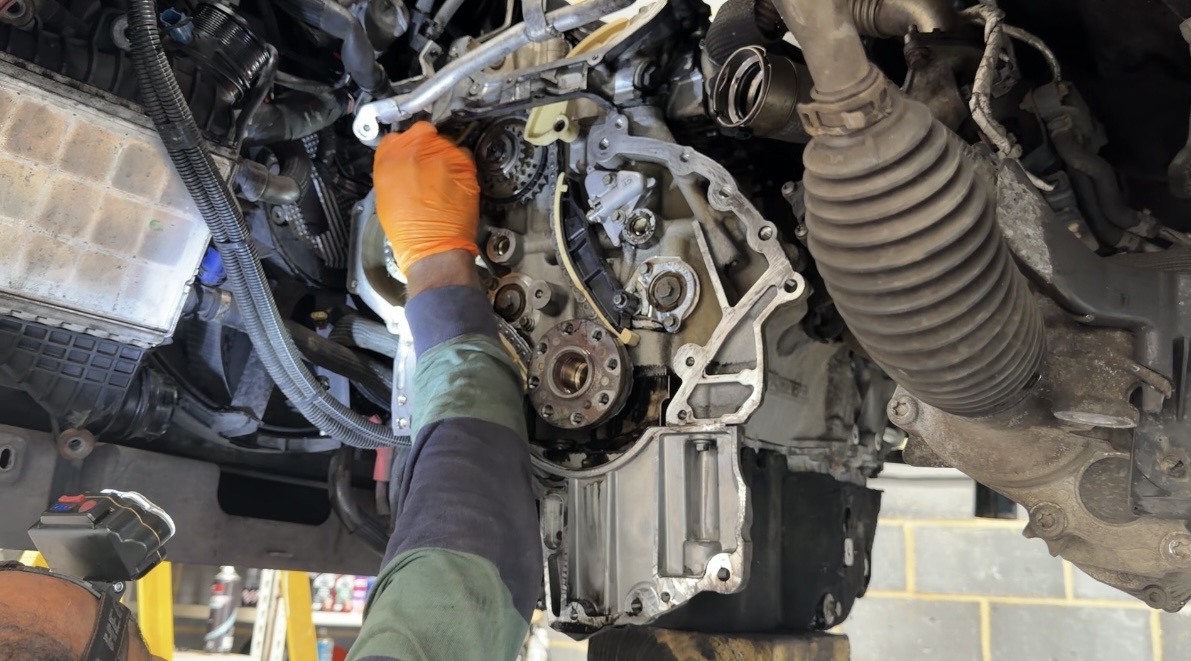
Cane Hill and the newer estates have added plenty of family cars and SUVs, many with chain-driven engines, while older estates and lanes around Chipstead Valley still have plenty of cambelt engines. Whatever the design, we start by confirming what has failed with compression and leak-down tests, a borescope and an oil check. If replacement is right, we source an engine with the same engine code and recommend a new cambelt kit on used engines of unknown history, because an unknown belt is a risk to your new engine.
Recovery from Coulsdon is simple for us, including from the narrow, winding lanes where stopping is awkward. We bring the car back up the A237 to Hackbridge, about 4.5 miles. You get a written quote before any work, supplier warranty details for the engine and a 3-month workmanship warranty on our labour.