Caterham Bourne flooding and engines that drink water
Purley sits where valleys meet, and the Caterham Bourne flooded parts of Purley and Kenley in early 2014, with flood alerts issued again since, including in 2024. Standing water on low roads is a real risk to engines. If you drive into water deep enough to reach the air intake, the engine draws it into the cylinders. Water does not compress, so the engine stops abruptly, and the force can bend connecting rods. Restarting an engine in that state is the most common way to turn a repairable problem into a full replacement.
Purley Cross is the other local hazard. The gyratory where the A23, A22, A235 and A2022 meet is often congested, with large vehicles turning across lanes, and engines idle and creep through it. A weak cooling system gives up here, and so do engines that are already short of oil. Around Reedham and the steep roads on either side of the valley, climbs put extra load on an engine, and a rising temperature gauge on a hill is a sign to stop, not push on.
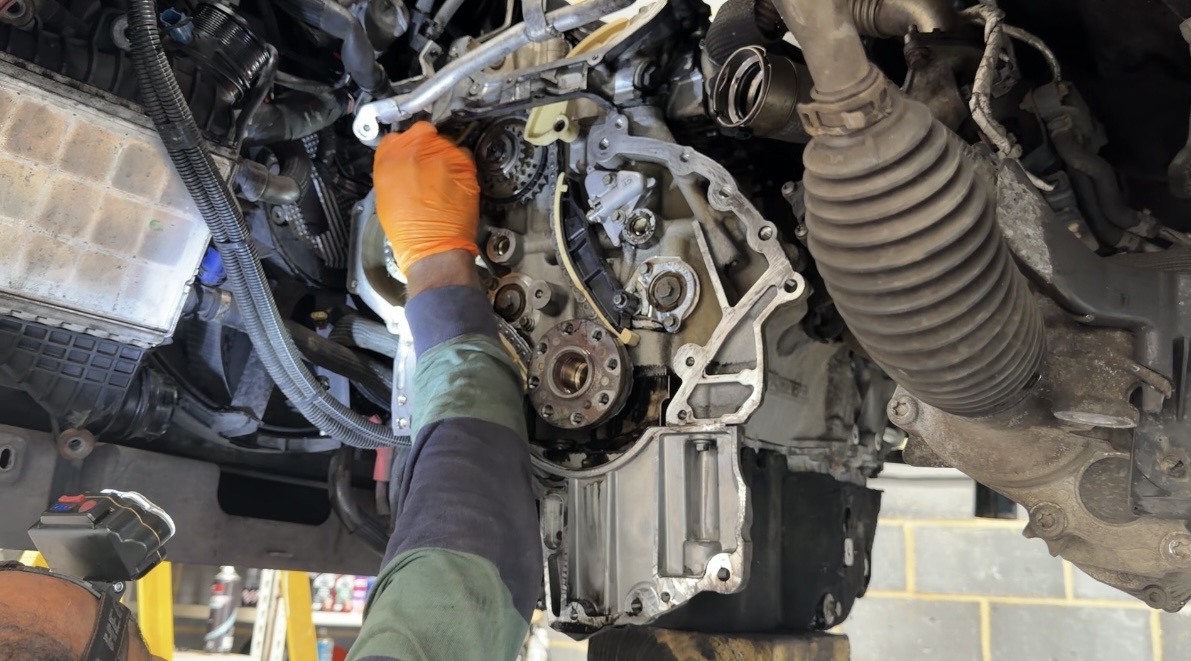
Our first step is to confirm the damage. With water ingestion, we remove the plugs or injectors, check for water in the cylinders and test compression. With mechanical failures, we use leak-down tests, a borescope and an oil check. If the engine is beyond repair, we source one with the same engine code, fit new seals and gaskets, and on used engines of unknown history recommend a new cambelt kit. If a head rebuild or timing kit will do, we say so instead.
Many cars around Purley are newer or premium models, and their value usually justifies a replacement engine. We can recover the car from Purley, bring it the 4.5 miles to Hackbridge and quote in writing before any work. Our labour carries a 3-month workmanship warranty.