
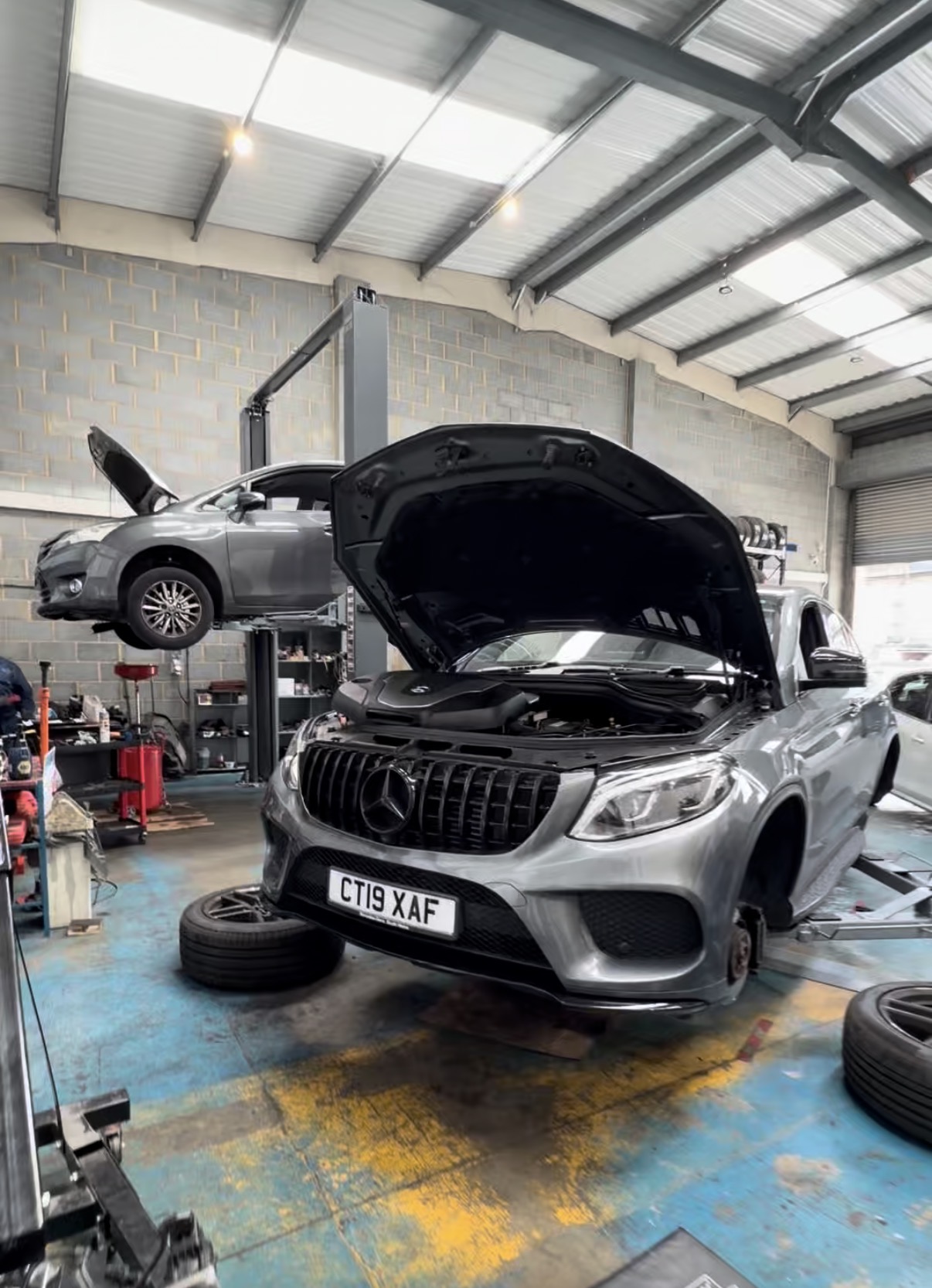
How we handle alternator replacement at Hackbridge
Testing happens with the car working, not idling quietly in a bay. The engine runs with headlights, heated rear screen, blower and heated seats switched on, because an alternator with a failed diode pack will hold a respectable voltage at no load and collapse the moment anything is asked of it. At the same time we measure voltage drop along the main output cable and back through the earth path. A few tenths of a volt lost in a corroded terminal is a fault in its own right, and from the driver's seat it looks exactly like a dead alternator.
The oscilloscope shows what a meter cannot. A healthy alternator produces a small, even ripple; one failed diode produces a deep, repeating dip in that pattern, often months before the car ever fails to start. We look at the battery properly too, including whether the vehicle is one of the makes that requires a replacement battery to be registered to the charging system. A battery swapped in without that step gets charged to the wrong strategy, and the symptoms look like a charging fault because in a sense they are one.
Only then does the belt system get the attention it deserves. The tensioner is checked for damping rather than simply for movement, the decoupler pulley on the alternator is checked for the correct free direction, and any oil on the belt is traced to its source before a new one goes on. Fitting the wrong pulley type costs belts and tensioners later, so the replacement is matched to what left the factory. We keep the old unit for you to look at, and where a remanufactured alternator carries a returnable surcharge on the old part, that is explained at quote stage rather than appearing as a line on the invoice.