
Head gasket replacement in South London, tested before we quote

A head gasket is one of the few repairs where the testing costs far less than the mistake. Cars reach us from across South London already quoted on the strength of a bit of emulsion under the filler cap, and a fair number of them turn out to need a thermostat and a coolant change. At Hackbridge the testing comes first, the findings go in front of you, and the written quote names the possible extras before the engine is opened. What we will not do is take a head off to find out.

  • ★★★★★ 4.9/5 from 87 Google reviews
  • From £850 · 2–4 days
  • Mon–Sat 8am–8pm
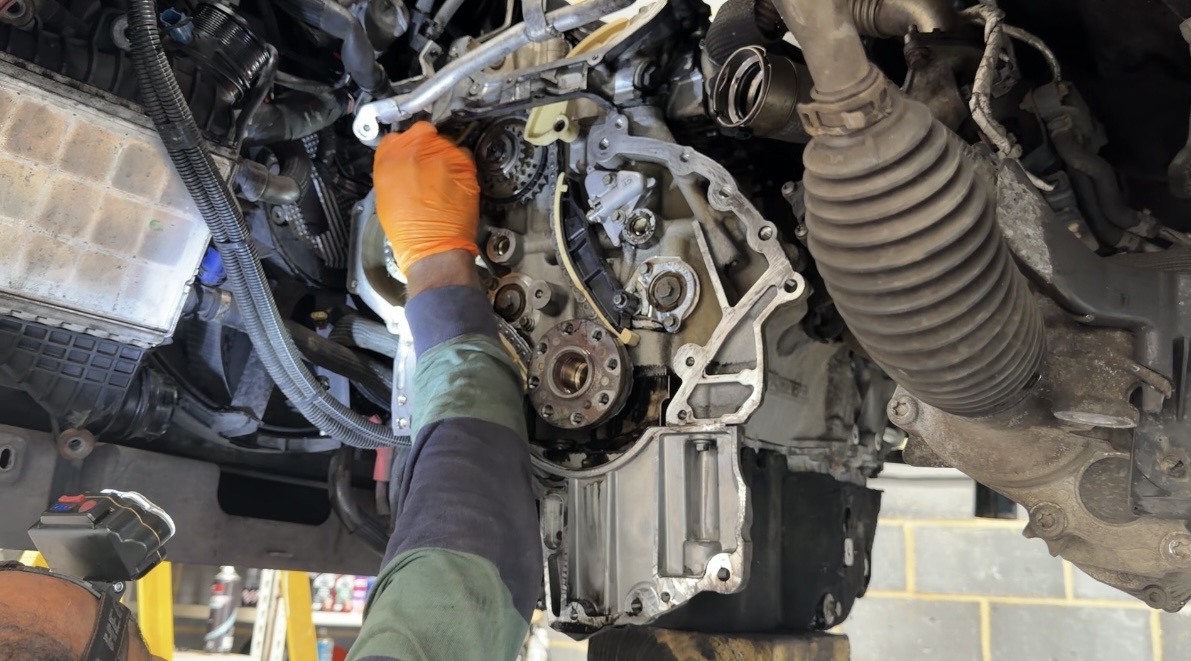
Technician working in an engine bay at KITH Cars Garage & Bodyworks, Hackbridge
From £850Written quote before we start
2–4 daysTypical time in the workshop
3 monthsWorkmanship warranty
17 areasCollection across South London

Tested, never assumed

Every quote starts with a block test, a pressure test and leak-down figures you can see for yourself. Several cars a year leave with a cooling system repair instead.

Contingencies priced up front

Machining, valve work and seized fixings are named and costed before the engine comes apart, so the ceiling of the bill is clear from the start.

The cause fixed, not just the seal

Thermostat, fans, radiator and water pump are assessed and quoted alongside the gasket. An unaddressed cooling fault takes the new gasket with it.

A straight answer on economics

Where the engine is not worth repairing we give you the comparison in figures. You are free to take that assessment anywhere you like.

How we handle head gasket replacement at Hackbridge

Testing happens on the ramp with the engine cold, because a system that has already been run and topped up tells you less. We pressurise it with a hand pump and watch the gauge hold or fall, then sample the air above the coolant with a block tester, whose reagent turns from blue to yellow the moment combustion gas reaches it. A leak-down test follows, with the cylinder pressurised and someone listening at the tank, the oil filler and the tailpipe to hear where it escapes. A borescope down the plug holes supplies the last piece: a piston crown steam cleaned by coolant looks nothing like its neighbours.

Everything found gets shown to you rather than described. The block test fluid keeps its colour change, the borescope images go on a screen, and the old gasket is kept on the bench so you can see the path along which it failed. We will not price this job from symptoms over the phone, and we will not bolt a new gasket to a head that has measured outside its flatness limit without machining it first. If you ask for a sealant additive instead, we will explain why we won't and where the money is better spent.

Pricing a job like this honestly means separating what is certain from what is not. The strip, the gasket set, the bolts, the fluids and the rebuild are known quantities and go into the written quote as fixed figures. Machining, valve work, a cracked casting or a manifold stud that shears are possibilities, so each is costed as a named contingency beforehand and none of them happens without a phone call first. The head goes to a machine shop for crack testing and skimming, and their findings come to you unedited. We also price the reason for the failure, because a new gasket behind a tired thermostat and a blocked radiator is money thrown away.

Head Gasket Replacement: what’s involved

Every time a cylinder fires, the head gasket has to contain that pressure while, millimetres away, sealing coolant galleries and oil feeds passing between the block and the head. Modern engines use a multi-layer steel gasket with embossed sealing beads, clamped by bolts tightened to a set torque and then a set angle. Once that clamping load is lost, usually after the head has distorted during an overheat or after years of corrosion around a coolant port, the seal can no longer hold.

What happens next depends on which part of the gasket has gone. Combustion gas forced into the water jacket pressurises the cooling system and pushes coolant out. Coolant drawn into a cylinder burns off as white steam. Oil and coolant meeting gives the familiar emulsion. The repair is simple in principle and heavy in labour, which is why the diagnosis and the reason for the failure both matter before any spanner is picked up.

Signs of a failed head gasket

Coolant disappearing with nothing on the floor

The expansion tank level drops week by week but there is no puddle and no stain under the car. Coolant burnt in a cylinder or pushed out as vapour leaves no trace on the drive.

White steam that never clears

Vapour still pouring out once the exhaust is hot, faintly sweet and leaving a damp film on the bumper, is coolant burning in the combustion chamber. Ordinary condensation stops within a couple of minutes of starting.

Pressurised header tank or bubbling

Combustion gas entering the water jacket makes the top hose go hard unusually early and can push bubbles up through the expansion tank at idle. It also forces coolant out of the overflow after you stop.

Emulsion on the filler cap or dipstick

A creamy deposit means water is meeting oil. Short winter journeys can leave the same thing under the cap alone, so we look at the dipstick and inside the cam cover before drawing any conclusion.

Temperature climbing or swinging

The gauge creeps up in traffic and falls again on the move, and the heater blows cold at a standstill. Gas in the system creates air pockets that the water pump cannot shift.

Heavy misfire after the car has stood

Coolant seeping past the seal overnight sits on a piston crown, giving a shaking start and a cloud of steam that clears once the water has burnt off.

Oil in the coolant

Dark, sludgy or oily-looking coolant in the tank points to oil crossing into the water jacket, although a failed oil cooler or, on an automatic, a leaking gearbox cooler can do exactly the same.

Weeping along the gasket line

An external failure shows as a coolant or oil stain running down the side of the block from the joint, often with a crusty white deposit where it has dried on.

When does a head gasket need replacing?

There is no service interval for a head gasket. It is replaced when testing shows it has failed, and that usually follows something else going wrong first: a stuck thermostat, a cooling fan that never cut in, a leaking water pump, a blocked radiator, or coolant so old it has lost its corrosion protection. Any episode where the temperature needle went into the red is worth investigating even if the car seems to have recovered, because the damage can take weeks to show itself.

  • After any overheating event, even where the car drives normally afterwards
  • When a chemical combustion-gas test on the coolant reads positive
  • Unexplained coolant loss of more than an occasional top-up between services
  • Compression or leak-down figures down on one or two neighbouring cylinders
  • Renew coolant to the correct specification on schedule to slow corrosion at the gasket's coolant ports

How we replace a head gasket

  1. Prove the failureWe pressure test the cooling system, run a chemical block test that draws air from the expansion tank through a fluid which changes colour in the presence of combustion gas, and carry out compression and cylinder leak-down tests while listening at the tank, oil filler and tailpipe.
  2. Rule out the impostorsA borescope through the plug holes shows a piston crown that has been steam cleaned by coolant. We also check the oil cooler, the EGR cooler on diesels and any gearbox cooler in the radiator, because each can mix fluids in a way that imitates a gasket failure.
  3. Written quote with the unknowns namedWe quote for the gasket set, bolts, fluids and labour, and list separately what could still be found with the head off, such as machining, valve work or a cracked casting.
  4. Strip downFluids are drained, then the manifolds, injectors or plugs, cam cover and timing belt or chain come off in the manufacturer's order with the engine locked at its timing position.
  5. Remove and read the headThe bolts are released in the reverse of the tightening sequence and the head lifted clear. The old gasket shows where it let go, and the deck and bores are inspected before anything is cleaned.
  6. Measure and machineThe face is checked for distortion with a straight edge and feeler gauges. Outside the manufacturer's limit and the head goes to a machine shop for crack testing and skimming, with valve seats or stem seals attended to while it is there.
  7. RebuildThe deck is cleaned without scoring it and the bores protected. A new gasket goes on dry unless the manufacturer specifies otherwise, and new bolts are torqued and angle-tightened in sequence, along with a new timing kit where one was disturbed.
  8. Fill, bleed and fix the causeThe system is vacuum filled with the correct coolant so no air is trapped, and the thermostat, pump, fans and radiator are checked so the original overheat cannot repeat. Oil and filter are renewed because the old fill is contaminated.
  9. Heat cycles, retest and handoverWe bring the engine to full temperature, check for leaks, repeat the combustion-gas test and road test. A final check once the engine has cooled confirms the joint is holding.

Gaskets and parts we fit

We fit complete gasket sets from established makers such as Elring, Victor Reinz and Ajusa, who supply the same multi-layer steel designs used as original equipment. Head bolts on almost every modern engine are torque-to-yield, so they are replaced rather than reused. Coolant is renewed to the exact specification your engine calls for instead of a universal mix, and the oil and filter are changed as part of the job, using the correct Castrol grade where that suits the engine.

  • Multi-layer steel head gasket and full upper gasket set
  • New torque-to-yield head bolts
  • Timing belt kit or chain components where they were disturbed
  • Coolant to the manufacturer's specification, and a thermostat where needed
  • Engine oil and filter to replace the contaminated fill
  • Cam cover and manifold gaskets, with new exhaust fixings

How long it takes

2–4 days

A four-cylinder engine with reasonable access is around two days of workshop time. Sending the head away for crack testing and skimming adds a day or two, and V-engines or tightly packed transverse installations take longer again. This is a leave-the-car job, not a wait-and-collect one.

What’s included

  • Cooling system pressure test and chemical combustion-gas test
  • Compression and cylinder leak-down testing before we quote
  • Full upper gasket set, new head bolts and fresh coolant
  • Head flatness measured, with machining arranged where required
  • Oil and filter change plus a cooling system fault check
  • Road test, retest after heat cycling and 3-month workmanship warranty

What people get wrong about head gasket replacement

Topping up and carrying on

Refilling the expansion tank every week keeps the car moving and lets coolant into places that cost a great deal to put right. The distance covered between the first top-up and the repair often decides whether it stays a gasket job at all.

Comparing quotes that are not comparable

A figure that undercuts everyone else usually leaves out the machine shop work, the bolts or the coolant. Ask each garage what happens if the head needs skimming before you decide anything on price.

Reusing head bolts

Torque-to-yield bolts stretch permanently the first time they are pulled down. Putting them back saves very little and spreads uneven clamping load across a brand new gasket.

Skipping the retest once it is hot

A joint can seal perfectly cold and let go when the alloy has expanded to working temperature. Without a retest after heat cycling, you find out about it on the motorway.

Price your head gasket replacement now

Enter your reg and we’ll look up your car, then price the job from our own labour rates and the book time for your model. Nothing is booked until you say so, and the written quote comes before any work.

  • Free, about 30 seconds, no sign-up
  • Parts, labour and VAT included
  • 3-month workmanship warranty
  • Collection and delivery across South London
“It’s rare to find a garage you can truly trust. Fair price, brilliant customer service.”Thinushan K. · ★★★★★ Google

Prefer to talk? Call 020 4629 9469 or WhatsApp us.

Loading instant quote…

Head Gasket Replacement: your questions answered

Can you give me a price over the phone?

Not an honest one. Gasket sets and labour vary enormously between engines, and until the head has been measured nobody knows whether machining is needed. What we can do on the phone is book the testing, tell you what that costs, and usually put a full written quote in your hands the same day.

Will a warranty or insurance policy cover this?

A used car warranty may cover a head gasket where the failure was not caused by neglected servicing or a known overheat, and the administrator will normally want the diagnosis in writing. We supply the test results and our findings in a form you can submit, but we cannot tell you how a particular policy will treat the claim.

Can I leave the car here while I think about it?

Yes. Once the testing is finished and the quote is with you, the car can sit at Hackbridge while you consider it or take a second opinion, and nothing starts without your go-ahead. If you do proceed, we can collect and deliver locally and a courtesy car may be available.

What does the 3-month workmanship warranty cover on a job this size?

It covers our labour and the way the parts were fitted. If the gasket we fitted fails through our workmanship within the year, we put it right. It does not cover a new failure caused by a repair we recommended and you chose not to have done, which is another reason the cooling system findings go to you in writing.

Will a bottle of head gasket sealer fix it?

Those products set where they meet hot gas, and on a properly failed gasket they either do nothing or block the radiator and heater matrix, adding cost to the real repair. We do not use them. The only case where one is worth considering is a car heading for scrap anyway.

Is emulsion under the oil cap always a head gasket?

No, and this catches a lot of people out. On a car doing short cold journeys, moisture condenses inside the cam cover and whips into the same creamy paste while the dipstick stays clean. A genuine failure normally shows in the coolant as well, and a block test settles the question in minutes.

Does the head always have to be skimmed?

Only when it measures outside the manufacturer's flatness limit. We measure rather than skim as routine, because every cut removes material, raises the compression ratio slightly and alters the timing geometry on belt-driven engines. Aluminium heads that have been badly overheated usually do need it.

Why did it fail, and can it happen again?

Most failures follow a cooling system fault: a thermostat stuck shut, a fan that never came on, a blocked radiator, an airlock left behind after an earlier repair, or coolant long past its life. Leave that cause in place and a new gasket goes the same way, so the whole system is checked as part of the work.

Is it worth doing on an older car?

Sometimes it is not, and we would rather say so before you spend anything. Where testing shows a cracked block, worn bores or a bottom end that has become noisy after running hot, a used or reconditioned engine can work out cheaper than the repair. We give you both figures and leave the decision with you.

Book your head gasket replacement with KITH Cars

Quick booking below. Or call 020 4629 9469.

Written quote before any work begins
No surprises on collection.
3-month workmanship warranty
On every repair.
Pick-up & drop-off across South London
Croydon, Sutton, Mitcham & more.
Mon–Sat 8am–8pm
Call 020 4629 9469WhatsApp Us
1Service
2Details
3Your Info
4Booking

What do you need?

Choose a service to get started.

Your contact details

So we can confirm your booking and send your quote.

Choose a preferred date & time

We'll confirm availability when we get back to you.

Loading…
MonTueWedThuFriSatSun

We reply within 30 minutes  ·  Prefer to call? 020 4629 9469

Booking request sent!

We've received your enquiry and will confirm your preferred slot within 30 minutes. Check your inbox — or we'll call you shortly.

020 4629 9469

What our customers say

Rated 4.9 ★ on Google — 87+ reviews

★★★★★

“BMW 1 Series needed a new timing chain and clutch. Fair price, courtesy car offered. Stands out from most garages.”

Aaron Konadu
★★★★★

“Professional, no upselling, everything explained clearly. Work completed same day and car runs perfectly.”

Ziaur Rahman
★★★★★

“Rare to find a garage you can truly trust. Fair price, brilliant service.”

Thinushan Keitheswaran
Read all reviews on Google ★★★★★
Chat on WhatsApp