
Wheel alignment in South London, measured and shown to you

An alignment is only worth having if somebody shows you the numbers. At our Hackbridge workshop the car goes on a level bay, targets go on all four wheels, and you see the readings for every angle against the manufacturer's own data before anything is touched. Some of those angles your car will let us move and some it will not, and we will tell you which is which rather than quietly adjusting whatever happens to be reachable. Drivers come to us from across South London, usually because a tyre has worn on one edge or the steering wheel has never sat straight.

  • ★★★★★ 4.9/5 from 87 Google reviews
  • From £59 · 60–90 minutes
  • Mon–Sat 8am–8pm
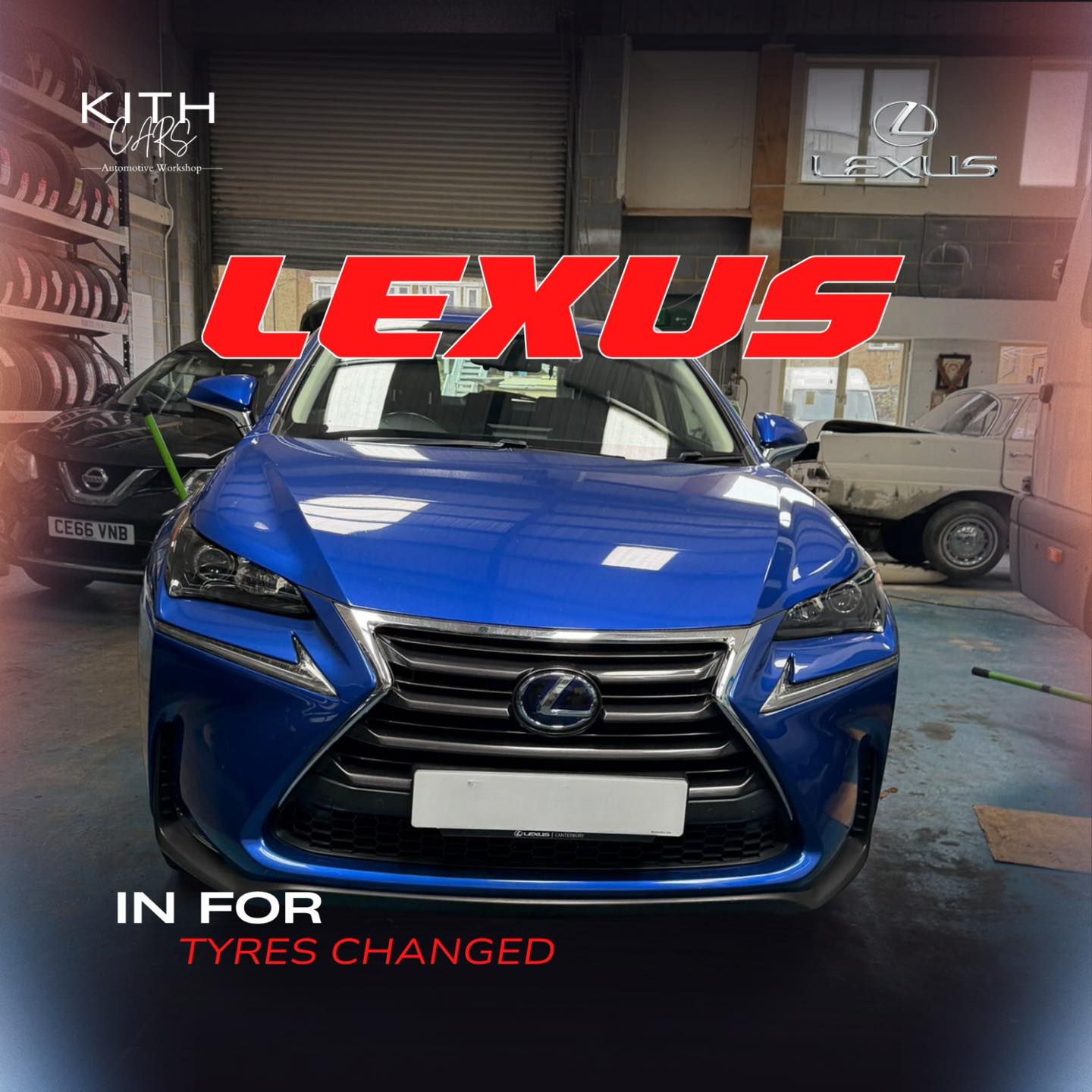
Lexus in for tyres and wheel work at KITH Cars Garage & Bodyworks, Hackbridge
From £59Written quote before we start
60–90 minutesTypical time in the workshop
3 monthsWorkmanship warranty
17 areasCollection across South London

You get the figures, not a claim

Readings for toe, camber, caster and thrust angle are shown on screen and printed before and after. Nothing about the job depends on taking our word for it.

Joints checked before any adjustment

We inspect the steering and suspension for play first, because a setting made on a worn joint has already moved by the time you reach the main road.

Honest about what will not move

Plenty of cars only allow front toe adjustment. We tell you where an angle is out and cannot be corrected, and what would actually be needed to bring it back.

Tyre wear read as evidence

The wear pattern on your old tyres tells us what the geometry has been doing for the last few thousand miles, and we use it to confirm the measurement makes sense.

How we handle wheel alignment at Hackbridge

The bay matters as much as the equipment. An alignment rig can only report the truth if the car is sitting level and square, so the ramp is checked and the car is settled on its own suspension rather than hanging on the jack. Tyre pressures go to the placard figures first, because a soft tyre changes the rolling radius and skews the camber reading before a single measurement is taken. Targets are clamped to the rims and the car is rolled back and forth through a compensation routine, which teaches the equipment to ignore a slightly buckled wheel instead of treating it as a geometry fault.

Before we adjust anything we get underneath with a pry bar. Play in a track rod end, a tired lower arm bush or a wheel bearing with a trace of movement will all put a setting out again within a week, so if we find one the alignment stops there and you get a written quote for the repair. We will not dial the good angles around a bent component either. If a strut has been pushed back in a pothole and the caster is out on one side, correcting the toe to hide the pull only makes the tyre wear worse, and we would rather say the car needs a part than sell an adjustment that papers over it.

You see the screen at the start and you keep the printout at the end, with the red and green figures for each angle side by side. The published alignment price from £59 covers the four-wheel measurement and the adjustment of every angle the vehicle allows. Anything beyond that, a seized track rod that has to be replaced or a camber bolt kit, is priced in writing and only fitted once you have said yes. If the measurement shows the car is already within tolerance, we tell you that too.

Wheel Alignment: what’s involved

Wheel alignment describes the angles at which the wheels sit in relation to each other and to the road. Toe is whether a pair of wheels points inwards or outwards seen from above, the angle that most affects tyre wear. Camber is the inward or outward lean of the wheel seen from the front, and it decides how flat the tread sits under cornering load. Caster is the backward tilt of the steering axis seen from the side, which gives the steering its self-centring and straight-line stability.

On a four-wheel measurement the rear axle is read as well. The thrust angle is the direction the rear axle actually points relative to the car's centreline, and if it is out the car tracks slightly sideways with the steering wheel crooked even when front toe is perfect. Setting the front wheels to the thrust line rather than to the geometric centre is what puts the wheel straight and keeps it there. Manufacturers publish a target for each angle with a tolerance either side, and those are the figures we work to.

Signs your alignment needs checking

Steering wheel sits crooked

The car goes straight but the spokes are at an angle. That is usually front toe set on the wrong reference, or a rear thrust angle that has never been measured.

Pulling to one side

On a flat, level road with a light grip the car drifts left or right. Unequal camber or caster is a common cause, though a dragging brake or a faulty tyre can do the same and has to be ruled out.

Feathered tread blocks

Run your palm across the tread: if the blocks feel sharp in one direction and smooth in the other, the toe setting is scrubbing the tyre sideways as it rolls.

One shoulder worn away

The inner or outer edge is down to the wear bars while the rest of the tread looks healthy. That pattern points to a camber or toe error rather than pressures.

Scrubbing or squeal on slow turns

A rubbing noise from the front when manoeuvring at walking pace can mean the wheels are fighting each other through the turn.

After a kerb strike or pothole

A hard hit can shift a track rod, bend a steering arm or move a subframe. The car may still feel normal while the tyre quietly wears out.

Steering slow to straighten

Coming out of a roundabout the wheel does not want to return on its own. Reduced caster or a binding top mount will both do this.

New tyres wearing quickly

If a fresh set loses noticeable tread within a few thousand miles, the geometry is almost always the reason rather than the tyres.

When should alignment be checked?

Have the angles checked whenever the suspension or steering has been disturbed, which means after replacing shock absorbers, springs, control arms, track rod ends or a steering rack, and after any accident repair involving the front end. A solid kerb impact or a deep pothole is worth a check even if nothing feels different. Beyond that, a check once a year, or with every new set of tyres, catches slow drift caused by settling springs and ageing bushes before it costs you rubber.

  • After any steering or suspension component is replaced
  • After a kerb strike, pothole impact or front-end accident repair
  • Once a year, or roughly every 10,000–12,000 miles
  • When fitting a new set of tyres, if the old ones wore unevenly
  • After lowering springs or a coilover kit are fitted

How we align a car

  1. Road test and check-inWe drive the car to feel where it pulls and where the steering wheel sits, and we ask what you have noticed. Any recent impact or repair work is noted.
  2. Wear and pressure checkThe car goes on the ramp and we check for play in the track rod ends, ball joints, wheel bearings and bushes, and look for damaged or mismatched tyres. Anything loose is quoted first, because an angle set on a worn joint will not stay set.
  3. Set up on the alignment gearTargets are clamped to all four wheels and the car is rolled through a compensation routine so the equipment ignores any small buckle in a rim.
  4. Measure and recordWe take the readings for toe, camber, caster and thrust angle, compare them with the manufacturer's data for your registration and print the starting figures.
  5. Explain what is adjustableWe show you which angles are out and which of them your car actually allows us to move. Where a correction needs an eccentric bolt kit or a camber bolt, we quote it before fitting anything.
  6. Adjust to specificationLock nuts are released, seized threads are freed with heat and penetrant where needed, and each adjustable angle is brought into tolerance with the steering rack held centred.
  7. Centre and tightenThe steering wheel is set straight with the rack in the middle of its travel, then every lock nut and clamp is torqued and the gaiters checked for twist.
  8. Reset and retestOn cars with stability control we carry out a steering angle sensor reset, then re-measure and print the finished figures.
  9. Road test and handoverA second drive confirms the car tracks straight and the wheel sits level. You keep the before and after printout.

Parts and adjusters

Most alignments need no parts at all, only time and careful adjustment. Where a thread has corroded solid, or a gaiter tears as the track rod turns, we quote the replacement before going further. Some cars need an adjuster kit to bring camber back into range, and we use OE or OE-equivalent components from established suspension suppliers such as Febi or Lemförder rather than unbranded parts.

  • Track rod ends and inner rack ends where threads are seized or worn
  • Steering rack gaiters and clips
  • Eccentric camber bolts and adjuster kits where the design allows
  • New lock nuts and clamp bolts
  • Subframe alignment where bolts have been disturbed

How long it takes

60–90 minutes

A four-wheel measurement and adjustment usually takes an hour to an hour and a half. Corroded adjusters, cars with rear toe and camber to set, and anything needing a parts change will take longer. Most jobs are done while you wait or over a morning.

What’s included

  • Pre-alignment inspection of steering and suspension joints
  • Tyre pressures set to the placard before measuring
  • Four-wheel measurement of toe, camber, caster and thrust angle
  • Adjustment of every angle the vehicle allows to be adjusted
  • Steering wheel centred and fixings torqued
  • Printed before and after readings to keep

What people get wrong about wheel alignment

Treating tracking as a full alignment

A front-only setting assumes the back of the car is perfect, which on a ten-year-old vehicle is an assumption rather than a fact.

Booking alignment to cure a vibration

A shake that appears at a specific speed belongs on a balancer. Money spent on geometry will not touch it, and the real fault stays.

Aligning a car with a worn joint

It is cheaper in the moment and worthless within a fortnight. The joint has to be replaced first or the money is simply gone.

Judging alignment by the steering wheel

A wheel that looks straight only tells you the front toe is balanced side to side. Both wheels can be toed out equally and eating tyres while the wheel sits perfectly level.

Price your wheel alignment now

Enter your reg and we’ll look up your car, then price the job from our own labour rates and the book time for your model. Nothing is booked until you say so, and the written quote comes before any work.

  • Free, about 30 seconds, no sign-up
  • Parts, labour and VAT included
  • 3-month workmanship warranty
  • Collection and delivery across South London
“It’s rare to find a garage you can truly trust. Fair price, brilliant customer service.”Thinushan K. · ★★★★★ Google

Prefer to talk? Call 020 4629 9469 or WhatsApp us.

Loading instant quote…

Wheel Alignment: your questions answered

Does the alignment come with any guarantee?

Our workmanship warranty runs for 3 months and covers the setting we made and the parts we fitted, so if something we adjusted has moved we will look at it again. What it cannot cover is a fresh kerb strike or pothole hit, which can put a car out in a single impact. The printout gives you a dated record of where the angles were when the car left us.

Is alignment something I can sit and wait for?

Most people wait. A four-wheel measurement and adjustment is usually an hour to an hour and a half, and there is no reason to leave the car unless adjusters are seized or parts are needed. With the workshop running to 8pm six days a week, an early or a late slot is usually there if waiting suits you better.

What happens to the price if the car needs parts first?

We stop and show you what we have found before spending any more of your money. You get a written quote covering the part and the labour, and the alignment is completed afterwards as part of the same visit. Nothing extra is fitted without your agreement, and the measurement we have already taken is yours either way.

Can you do it at the same time as fitting new tyres?

Yes, and it is the sensible order: tyres first, then alignment, so the new rubber starts life on correct angles. Book both together and the car only comes in once. If your old tyres show edge wear, tell us when you book and we will look at the geometry before recommending which new tyres to fit.

What is the difference between tracking and four-wheel alignment?

Tracking measures and sets only the front toe, and assumes the rear axle is pointing exactly where the factory intended. Four-wheel alignment measures the rear as well, works out the thrust angle, and sets the front to that line. If the rear has never been checked, tracking alone can leave the steering wheel off centre.

My steering wheel vibrates at motorway speed. Will alignment cure it?

Almost certainly not. A shake that comes in at a particular speed is normally a balance problem, a buckled rim or a distorted tyre, and it is fixed on a balancer rather than an alignment rig. Alignment faults show up as pulling, crooked steering and uneven wear instead of vibration.

Can every angle be adjusted on my car?

No. Many modern cars are only designed to allow front toe adjustment, with camber and caster built into the strut and subframe. Rear toe and camber are adjustable on most multi-link rear ends but not on a simple torsion beam. Where an angle is out and cannot be moved, the cause is usually a bent or displaced component, and we will say so rather than dial the other angles around it.

Does anything need resetting afterwards?

On cars with stability control the steering angle sensor learns where straight ahead is, so it needs a reset once the wheel position changes. Vehicles with a forward-facing camera for lane keeping may also need that camera recalibrated if the thrust angle has moved significantly. We tell you before the job whether your car is likely to need it.

Will alignment fix tyres that are already worn unevenly?

It stops the wear getting worse, but rubber does not grow back. A tyre with a worn inner shoulder stays worn, and if the cords are showing or the tread is below the legal limit on part of the tyre it still has to be replaced. Correcting the angles first means the replacement wears evenly.

Book your wheel alignment with KITH Cars

Quick booking below. Or call 020 4629 9469.

Written quote before any work begins
No surprises on collection.
3-month workmanship warranty
On every repair.
Pick-up & drop-off across South London
Croydon, Sutton, Mitcham & more.
Mon–Sat 8am–8pm
Call 020 4629 9469WhatsApp Us
1Service
2Details
3Your Info
4Booking

What do you need?

Choose a service to get started.

Your contact details

So we can confirm your booking and send your quote.

Choose a preferred date & time

We'll confirm availability when we get back to you.

Loading…
MonTueWedThuFriSatSun

We reply within 30 minutes  ·  Prefer to call? 020 4629 9469

Booking request sent!

We've received your enquiry and will confirm your preferred slot within 30 minutes. Check your inbox — or we'll call you shortly.

020 4629 9469

What our customers say

Rated 4.9 ★ on Google — 87+ reviews

★★★★★

“BMW 1 Series needed a new timing chain and clutch. Fair price, courtesy car offered. Stands out from most garages.”

Aaron Konadu
★★★★★

“Professional, no upselling, everything explained clearly. Work completed same day and car runs perfectly.”

Ziaur Rahman
★★★★★

“Rare to find a garage you can truly trust. Fair price, brilliant service.”

Thinushan Keitheswaran
Read all reviews on Google ★★★★★
Chat on WhatsApp