
Car Air Con Recharge for Streatham Drivers

A 20mph crawl along the A216 Mitcham Lane or Streatham High Road is hard work for a car's air conditioning in summer. We are about 20 minutes from Streatham in Hackbridge, and a regas with full vacuum and leak test is usually complete within an hour.

  • ★★★★★ 4.9/5 from 87 Google reviews
  • ~20 min from Streatham
  • Mon–Sat 8am–8pm
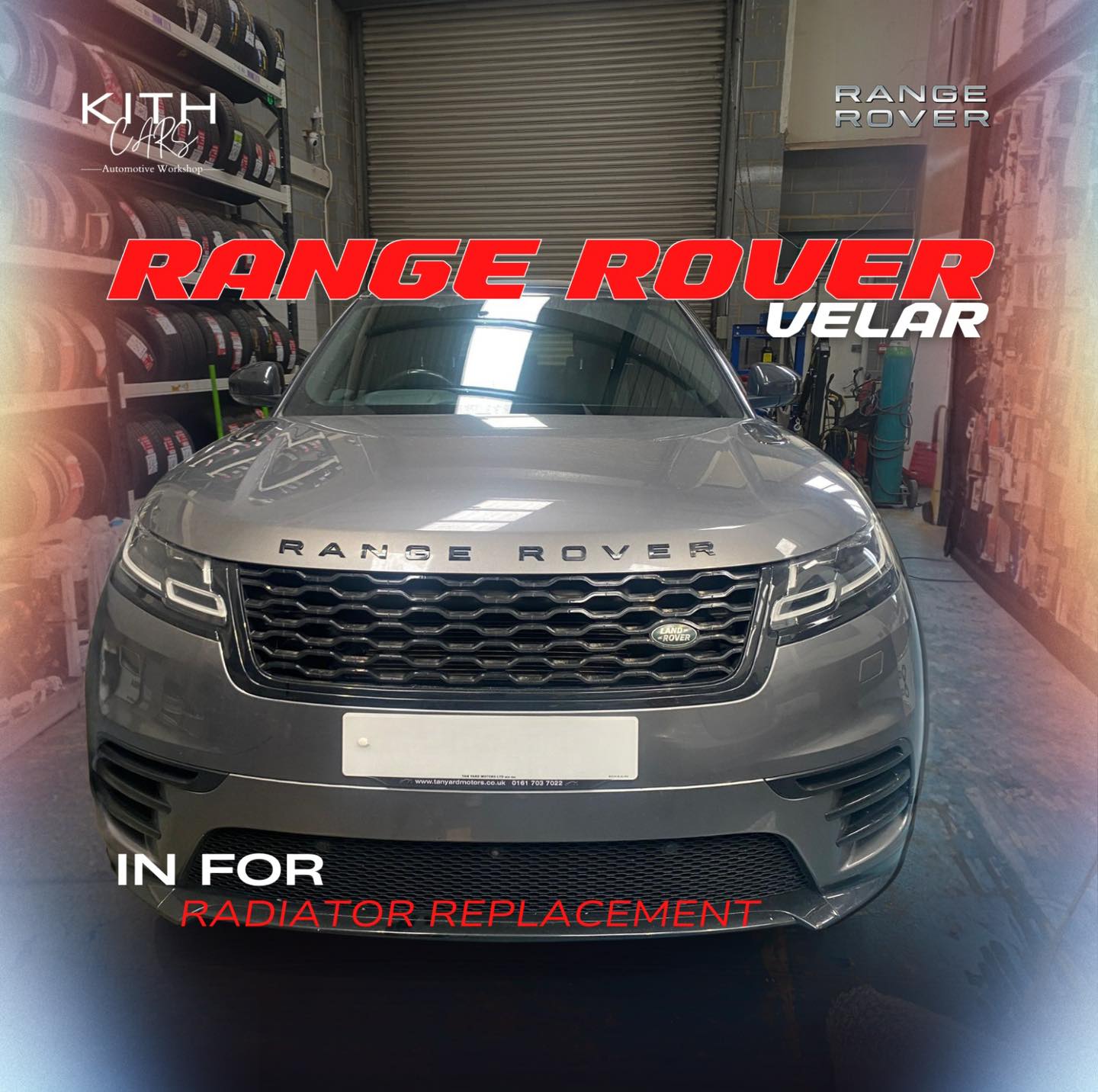
Range Rover Velar in for cooling system work at KITH Cars Garage & Bodyworks, Hackbridge

Slow red routes and parked-up cars: Streatham's air con problem

Streatham's main roads are slow by design. The High Road and Streatham Hill are 20mph red routes full of buses and crossings, and the A216 Mitcham Lane from St Leonard's Church queues towards the Figges Marsh signals. For air conditioning, that means long periods at low speed with little airflow through the condenser. A system with its full charge will still cool. One that has lost refrigerant over a few summers will feel weak in exactly these conditions, on the way down past Norwood Grove or sitting outside the Odeon.

Parking plays a part too. As Lambeth extends controlled parking zones, including the Streatham Vale zones running at lunchtime on weekdays, more people drive less or leave the car parked for longer. Systems that are rarely switched on lose refrigerant through seals that dry out, because the oil that keeps them supple only moves when the compressor runs. Cars from the terraced streets around Streatham Village often arrive with a lower charge than their age would suggest.

Whatever the cause, the regas process stays the same. We read the label to confirm R134a or R1234yf, recover the old charge and weigh it, and run a vacuum test to make sure the system is sealed before we refill it by weight with the correct oil. Then we measure the vent temperature. If the system does not hold vacuum, we explain what we found and give you a written quote rather than adding refrigerant that would leak straight out again.

The route to Hackbridge heads south-west down Mitcham Lane and Streatham Road, left at Figges Marsh onto the A217, round Mitcham to the Cricket Green, then Cranmer Road and Carshalton Road south. Allow about 20 minutes. If you would rather not do the drive, collection and delivery can be arranged, and repairs are covered by our 3-month workmanship warranty.

Air Conditioning Regas: what’s involved

Car air conditioning works by pumping refrigerant round a sealed circuit. The compressor, driven by the engine or, on hybrids and electric cars, an electric motor, squeezes the refrigerant into a hot, high-pressure gas. It cools and condenses in the condenser at the front of the car, then expands through a valve into the evaporator behind the dashboard, where it absorbs heat from the air blowing into the cabin.

Cars built before around 2013 almost all use R134a. Most cars from about 2017 onwards use R1234yf, which has a far lower environmental impact, and some models switched earlier. The two are not interchangeable and need different equipment. Every system loses a little refrigerant over time through seals and hoses, so cooling gradually fades. The refrigerant also carries the compressor's lubricating oil, so running low affects more than comfort.

From £49Written quote first
45–60 minutesTypical time in the workshop
3 monthsWorkmanship warranty
4.9★87 Google reviews

Signs your air conditioning needs attention

Air not as cold as it was

Gradually weaker cooling over a few summers usually means the refrigerant charge has dropped, which a regas can put right.

Only cold at speed

Cooling that is fine on the move but weak at idle can point to a low charge, a condenser fan fault or a blocked condenser.

No cold air at all

If the air is warm, the system may be nearly empty and the compressor won't engage. A fast loss like this points to a leak that should be found first.

Windows slow to demist

The air conditioning dries the air, which is why it clears a misted windscreen quickly. Weak demisting can be a sign the system isn't working.

Noise when the AC is on

A rattle, grind or squeal when the air conditioning switches on can point to a worn compressor, compressor clutch or drive belt.

Musty smell from the vents

A damp, stale smell often comes from bacteria on the evaporator or a dirty cabin filter rather than the refrigerant itself.

Compressor clutch not engaging

On belt-driven compressors, the clutch on the front should click in when you press the AC button. If it doesn't, the pressure may be too low or there is an electrical fault.

When should it be done?

Most systems benefit from a regas every two to three years, as some refrigerant escapes naturally through seals and hoses. Book sooner if you notice cooling getting weaker. If the air conditioning has stopped cooling within weeks or months of a previous regas, there is a leak, and topping it up again will only waste refrigerant. In that case we recommend a leak test with UV dye before recharging.

  • Every 2–3 years as general maintenance
  • When cooling becomes noticeably weaker
  • Before summer if you had weak cooling last year
  • After any repair that opens the system, such as a new condenser or compressor
  • Leak test first if cooling was lost soon after a previous regas

How we regas air conditioning

  1. Check-in and refrigerant typeWe check the label under the bonnet to confirm whether your car uses R134a or R1234yf, and the quantity the manufacturer specifies.
  2. Performance checkWith the engine running we check vent temperature, compressor engagement and the condenser fan, and look for obvious damage or oily leak marks.
  3. Recover old refrigerantOur machine recovers the remaining refrigerant and weighs it, which tells us how much the system had lost. Refrigerant is never vented into the air.
  4. Vacuum and leak testThe system is held under vacuum to boil off moisture, then monitored to see if it holds. A system that loses vacuum has a leak and needs repair before recharging.
  5. Recharge by weightWe refill with the exact weight of refrigerant the manufacturer specifies, plus the correct compressor oil. UV dye can be added to help trace slow leaks later.
  6. Test and verifyWe run the system and check vent temperature and pressures to confirm it is cooling properly and the compressor is cycling normally.
  7. HandoverWe tell you how much refrigerant was recovered and whether that suggests a leak, so you know if further investigation is worthwhile.

Refrigerant and oils we use

We use the refrigerant your car was designed for, either R134a or R1234yf, and charge it by weight to the manufacturer's figure, since overfilling is as bad for performance as underfilling. The compressor oil must match too: PAG oil of the correct grade for most belt-driven compressors, and POE oil for many hybrid and electric cars with electric compressors, because the wrong oil can damage them. Replacement parts are OE or OE-equivalent.

  • R134a or R1234yf refrigerant, matched to your car
  • Compressor oil to the correct type and grade, including POE for electric compressors
  • UV leak detection dye where appropriate
  • OE or OE-equivalent condensers, compressors, valves and seals, quoted separately

How long it takes

45–60 minutes

A straightforward regas takes around 45–60 minutes including the vacuum and leak test. If a leak is found, finding and repairing it takes longer and may need parts ordering.

What’s included

  • Refrigerant type and system check
  • Recovery and weighing of old refrigerant
  • Vacuum and leak-down test
  • Recharge by weight to manufacturer specification
  • Compressor oil top-up
  • Vent temperature and performance test

From Streatham to our Hackbridge workshop

From St Leonard's Church take Mitcham Lane (A216) south-west; it becomes Streatham Road and reaches the signalised Figges Marsh junction in Mitcham, where you turn left onto London Road (A217). Follow the A217 around Mitcham town centre's one-way system to the Cricket Green, take Cranmer Road (A239) to Carshalton Road (A237) and head south past Mitcham Junction; past Beddington Corner it becomes London Road into Hackbridge, where Soho Mills is near Hackbridge station.

Take the A216 Mitcham Lane from St Leonard's Church to Figges Marsh, then the A217 through Mitcham and Carshalton Road (A237) south to Hackbridge, around 20 minutes. Collection can be arranged if the drive is inconvenient.

Directions from Streatham

About Streatham

Streatham is a large, busy south London district strung along the A23, the line of the old London to Brighton road, and is one of London's designated major town centres. It grew from a Georgian spa village into a Victorian and Edwardian suburb, and today mixes big period houses and mansion blocks around Streatham Hill and the Common with terraced streets in Streatham Vale and Streatham Park. It is popular with young families and professionals commuting into central London. Driving here is dominated by the long, slow A23 high road, with residential side streets increasingly shaped by parking zones and traffic filters.

Places nearby: Streatham Common, The Rookery, Norwood Grove, St Leonard's Church, Streatham Ice and Leisure Centre, Streatham Hill Theatre

Postcodes: SW16, SW2 · London Borough of Lambeth (with western fringes in Wandsworth)

More about KITH for Streatham drivers

Air Conditioning Regas in Streatham: your questions answered

Is it worth coming from Streatham for an air con regas?

The drive is about 20 minutes, and the regas includes a vacuum and leak test rather than a quick top-up, so you find out whether the system is actually sealed. Many people combine it with a service or MOT to make the trip worthwhile.

My car stays parked in a CPZ most weeks. Will that affect the air con?

Possibly. Air conditioning systems that are rarely used tend to lose refrigerant through dried seals. Run the air con for a few minutes whenever you drive, and consider a regas every two to three years.

Which way should I drive to avoid the LTN cameras?

Stay on the main roads: Mitcham Lane and Streatham Road down to the Figges Marsh junction in Mitcham, then the A217. That keeps you clear of the Streatham Hill filters, which are on residential roads such as Palace Road.

Which refrigerant does my car use?

Check the sticker under the bonnet, usually on the slam panel or near the radiator. As a rough guide, most cars before about 2013 use R134a and most from about 2017 use R1234yf, with some models changing in between. We always confirm before starting.

Can R134a be put in an R1234yf system, or the other way round?

No. The systems use different service connectors, different oils and are designed around different pressures and properties. Mixing or converting refrigerants isn't something a reputable garage should do.

Will a regas fix a leak?

No. A regas refills the system, but if it is leaking the charge will drop again. If cooling disappeared quickly after a previous regas, we recommend a leak test with UV dye so the leak can be found and repaired first.

Why does the price differ between cars?

R1234yf is considerably more expensive than R134a, and systems hold different amounts of refrigerant. We confirm the refrigerant type and the price before we start work.

Should I run the air conditioning in winter?

Yes. Running it for a few minutes regularly keeps oil circulating to the compressor and seals, and it dries the air so the windows demist faster. Many cars run it automatically when you select demist.

Price your air conditioning regas now

Enter your reg and we’ll look up your car and price the job from our own labour rates and the book time for your model. Then book it in with a fixed written quote before any work starts.

  • Free, about 30 seconds, no sign-up
  • Parts, labour and VAT included
  • 3-month workmanship warranty
  • Collection from Streatham can be arranged
“It’s rare to find a garage you can truly trust. Fair price, brilliant customer service.”Thinushan K. · ★★★★★ Google

Prefer to talk? Call 020 4629 9469 or WhatsApp us.

Loading instant quote…
Chat on WhatsApp